
Neck Pain
Neck Pain Clinic @ SG Neck

By Neurosurgery Singapore
What is consider as neck pain?
Many people experience pain at the neck or stiffness occasionally. In many cases, it’s due to poor posture or muscle strain, or aging. At times, the reason may be more immediate and impactful such as injury from a fall, contact sports, or a car accident (whiplash).
Your neck is made up of vertebrae that extend from the skull to the upper torso. Cervical discs absorb shock between the bones.
The bones, ligaments, and muscles of your neck support your head and allow for motion. What causes neck pain or stiffness can be due to any abnormalities, inflammation, or injury in these region.
Some possible common neck pain causes due to:
Muscle Strain: Overuse, poor posture, or sudden movements can lead to strain in the muscles of the neck, causing pain and discomfort.
Poor Posture: Prolonged periods of sitting with incorrect posture, such as slouching, can strain the neck muscles and lead to pain.
Whiplash Injury: A sudden, forceful back-and-forth movement of the neck, often occurring in car accidents, can result in whiplash, causing pain and stiffness.
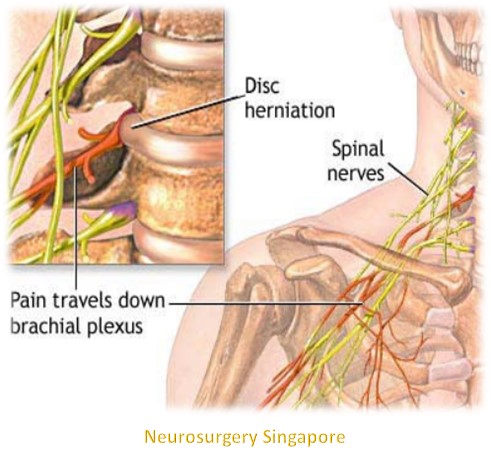
Herniated Disc: Similar to the lower back, a herniated disc in the neck can put pressure on nerves and cause pain.
Cervical Radiculopathy: Compression or irritation of a nerve in the neck can cause pain that radiates down the arm and into the hand.
Cervical Spondylosis: Degenerative changes in the cervical spine, including osteoarthritis, can lead to pain, stiffness, and reduced mobility in the neck.
Cervical Stenosis: Narrowing of the spinal canal in the neck can put pressure on the spinal cord and nerves, resulting in pain and other neurological symptoms.
Muscle Tension: Stress and anxiety can cause muscle tension in the neck, leading to discomfort and pain.
- Pinched Nerve: Pressure on a nerve in the neck due to herniated discs, bone spurs, or other conditions can lead to pain, numbness, and tingling.
- Osteoporosis: Weakening of the bones due to osteoporosis can increase the risk of fractures in the neck, leading to pain.
- Referred Pain: Sometimes, pain from other areas of the body, such as the shoulders or upper back
- Cervical Muscle Imbalance: Imbalances in the strength and flexibility of neck muscles can lead to discomfort and pain.
We can diagnose the underlying cause and recommend appropriate treatments or interventions based on your specific situation.
What are some related symptoms?
Signs and symptoms of neck pain may include:
- Pain that’s often worsened by holding your head in one place for long periods, such as when driving or working at a computer
- Muscle tightness and spasms
- Decreased ability to move your head, limiting range of motion
- Soreness and difficulty moving the neck, especially when trying to turn the head from side to side.
- Sharp pain may be localized to one spot and might feel like it is stabbing or stinging. This type of pain typically occurs in the lower neck.
- Radicular pain can radiate along a nerve from the neck into the shoulder and arm. The intensity can vary and this nerve pain might feel like it is burning or searing.
- Neurological deficits—such as problems with reflexes, sensation, or strength—may be experienced in the arm due to nerve root compression.
- Headaches
“A positive outlook for recovery depends on accurately identifying the underlying causes and effectively treating the neck pain. Most forms can resolve with conservative measures including rest, avoiding reinjury, and gradual rehabilitation.”
We have a solution to stop the pain. Click here to let us help you.
Should you see an Orthopaedic Specialist or a Neuro Spine Specialist for treatments for neck?
Many people often believe that seeing an orthopedic spine specialist is the best option for for this condition. However, from a medical treatment perspective, consulting a neuro spine specialist may be more beneficial. Here’s why:
The spine is intricately connected to the nervous system, and the neck, being close to the head, can sometimes cause headaches that are actually rooted in neck issues. Additionally, the neck is closely connected to the shoulders, and the nerves in this region can be affected by various conditions. While orthopedic spine specialists primarily focus on treating structural issues such as bones, muscles, and joints, neuro spine specialists take a more holistic approach. They consider both the musculoskeletal and neurological aspects of spinal pain, allowing them to address nerve-related issues, which are often a significant contributor to spinal conditions.
If conservative, non-invasive treatments fail and surgery becomes necessary, the surgical approaches of orthopedic spine surgeons and neuro spine specialists can differ considerably. Medical experts highlight that neuro spine procedures often involve more intricate work on the nerves and spinal cord, requiring specialized techniques.
Neurosurgery frequently involves microsurgical procedures, where the surgeon uses a microscope for highly precise surgery. This minimizes structural damage to the bones, which is particularly important as people age. As bones weaken over time, preserving their integrity during surgery is crucial to prevent complications.
What types of neck pain treatments?
The treatment for pain neck depends entirely on the cause of the problem. Therefore, it is of utmost importance that you understand the cause of your symptoms before embarking on a treatment program. If you are unsure of your diagnosis, or the severity of your condition, you should seek medical advice before beginning any treatment.
Medications
Our Specialist might prescribe stronger pain medicine, as well as muscle relaxants or pain relief and reduce inflammation.
Therapy
- Physical therapy. Our physical therapist can teach you correct posture, alignment and neck-strengthening exercises, and can use heat, ice, electrical stimulation and other measures to help ease your pain and prevent a recurrence.
- Transcutaneous electrical nerve stimulation (TENS). Electrodes placed on your skin near the painful areas deliver tiny electrical impulses that may relieve pain.
- Traction. Traction uses weights, pulleys or an air bladder to gently stretch your neck.
- Short-term immobilization. A soft collar that supports your neck may help relieve pain by taking pressure off the structures in your neck.
Surgical and other procedures
- Steroid injections. Our doctor might inject corticosteroid medications near the nerve roots, into the small facet joints in the bones of the cervical spine or into the muscles in your neck to help with pain. Numbing medications, such as lidocaine, also can be injected to relieve severe pain.
- Surgery. Rarely needed for pain neck. However an ACDF surgery might be an option for relieving nerve root or spinal cord compression.


Understanding Neck Pain nerve related issues
High-Cervical Nerves (C1 – C4)
- Most severe of the spinal cord injury levels
- Paralysis in arms, hands, trunk and legs
- Patient may not be able to breathe on his or her own, cough, or control bowel or bladder movements.
- Ability to speak is sometimes impaired or reduced.
- When all four limbs are affected, this is called tetraplegia or quadriplegia.
- Requires complete assistance with activities of daily living, such as eating, dressing, bathing, and getting in or out of bed
Low-Cervical Nerves (C5 – C8)
- Corresponding nerves control arms and hands.
- A person with this level of injury may be able to breathe on their own and speak normally.
C5 injury
- Person can raise his or her arms and bend elbows.
- Likely to have some or total paralysis of wrists, hands, trunk and legs
- Can speak and use diaphragm, but breathing will be weakened
C6 injury
- Nerves affect wrist extension.
- Paralysis in hands, trunk and legs, typically
- Should be able to bend wrists back
- Can speak and use diaphragm, but breathing will be weakened
C7 injury
- Nerves control elbow extension and some finger extension.
- Most can straighten their arm and have normal movement of their shoulders.
- Can do most activities of daily living by themselves, but may need assistance with more difficult tasks
C8 injury
- Nerves control some hand movement.
- Should be able to grasp and release objects
- Can do most activities of daily living by themselves, but may need assistance with more difficult tasks

Things you can do to ease your pain
If pain at the neck is not debilitating and didn’t start as the result of trauma, then often the pain can be treated by oneself. Self-care options can include:
- Rest. With most neck strains and sprains, going easy for a few days is all that is needed while the muscles and tendons heal on their own. It is important to be careful to avoid strenuous activities or movements that are causing more pain. If no improvement can be felt within days, it is better to consult our Specialist for faster recovery.
- Ice and/or heat. Applying ice can work as an anti-inflammatory to reduce swelling and pain. Initially, it’s better to apply ice or cold packs on the neck because they can temporarily close small blood vessels and prevent swelling from becoming worse. After a couple days, ice or heat can be applied on an alternating basis. Applying continuous heat can cause increased swelling.
